Categories
Playground Safety Surfacing

Is Artificial Turf Safe for Playgrounds?

Artificial turf was first created by David Chaney and his team of researchers at the North Carolina State University in 1960 for baseball fields. It wasn’t until the 1970’s that artificial turf became the top pick of surface material used in sport stadiums and fields across the USA and Canada.


Artificial Turf Many Uses

Artificial Turf allows traditional outdoor sports to be moved indoors, such as football, baseball, soccer, field hockey, lacrosse, and tennis. Soon after its creation, artificial grass was even used at ski and snowboard resorts and European clubs to create a feeling of warm and sunny conditions.

Additionally, airports began using the surfacing because it provided a reliable pathway for emergency vehicles and planes that veer off the runway. Neighborhoods, schools, and places of business began laying artificial grass on its grounds to reduce the amount of insects and animals that are normally attracted to grass. These places also wanted a pleasing view of always-green grass.

So What Exactly is Artificial Turf?
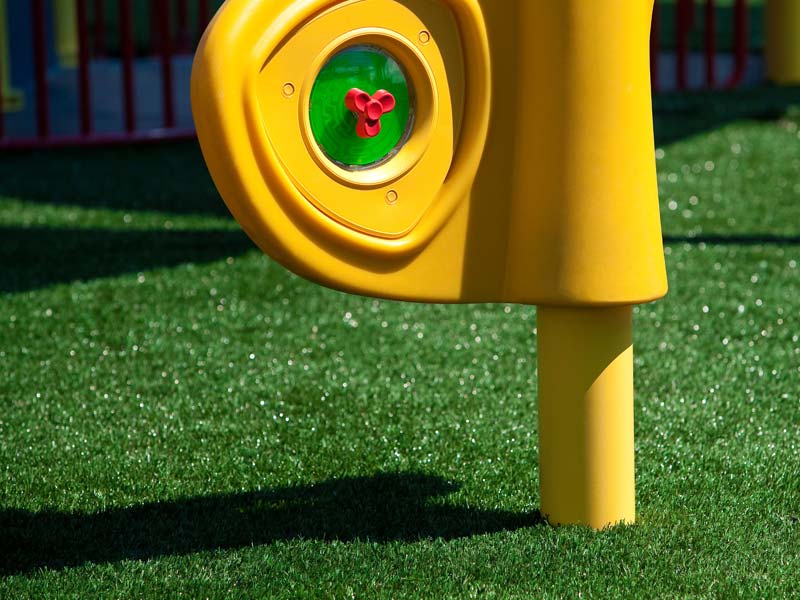
A close-up example of artificial playground turf.
Close-up of playground turf.

To start, artificial grass is a unique blend of polyethylene monofilament fibers and thatch layer that simulates a fine fescue grass or blue grass. This combination of fibers gives the turf its very soft, rich carpet like feel. Turf products are installed using a shock absorption and drainage pad for a long-lasting healthy environment.

Furthermore, turf has become the perfect supplement to real grass around the world for sports, recreation, businesses and even schools. This material provides benefits for places with harsh weather conditions, places with unwanted pests, and even places that just want a low-maintenance yard.

Artificial Turf Benefits

Some advantages of installing artificial turf are as follows:

  • It’s weather friendly. This is a wonderful supplement for hot environments or places that don’t get a sufficient amount of sunlight. Grass has a difficult time surviving in those conditions, but artificial turf can last in any climate or weather condition.
  • Turf won’t get soggy in the rain. This surface material doesn’t become muddy or flood like natural grass does. Because it has a layer under the grass-like layer that acts as a drainage system, water can easily fall through to the drain pad and then runoff to public drains.
  • You don’t need to trim or fertilize the surface. In turn, you can save money by reducing the number of people hired to maintain your lawn.
  • The surface material deters insects and other animals. Turf eliminates all components required for insect and animal survival such as soil, nutrients, and water. Also, it reduces the risk of hidden foreign objects that can potentially injure children who fall.
  • Turf is always vibrant green. You never have to worry about the visual appeal of your park, lawn, place of business or playground area.

Artificial turf has many benefits to play areas, residential and commercial lawns, resorts and sports fields. If you would like more information about artificial turf and its benefits, please visit BYO Recreation’s website. One of our professionals will be happy to provide you with more information on artificial turf and other surfaces.
Categories
Playground Safety Playground Safety Surfacing

Does Your Playground Surfacing Lack Shock Absorbency?

Playground surfacing is one of the most important parts of a play space. Why? Because when kids fall they can get scrapes, cuts, bruises and, in serious cases, broken bones. However, with the right surface, you can help reduce the amount of damage done to a child who falls on the playground.


Playground Surfacing Types

All playground surfacing has a percentage of shock absorbency, some more than others. For example, concrete has a very poor ability to absorb shock waves from children who fall, resulting in more intense injuries. In contrast, rubber and wooden mulch have very high shock absorbency abilities. As a result, children who fall suffer less damage because most of the impact is absorbed into the surface.

Rubber Mulch

An example of multi-colored rubber mulch playground surfacing
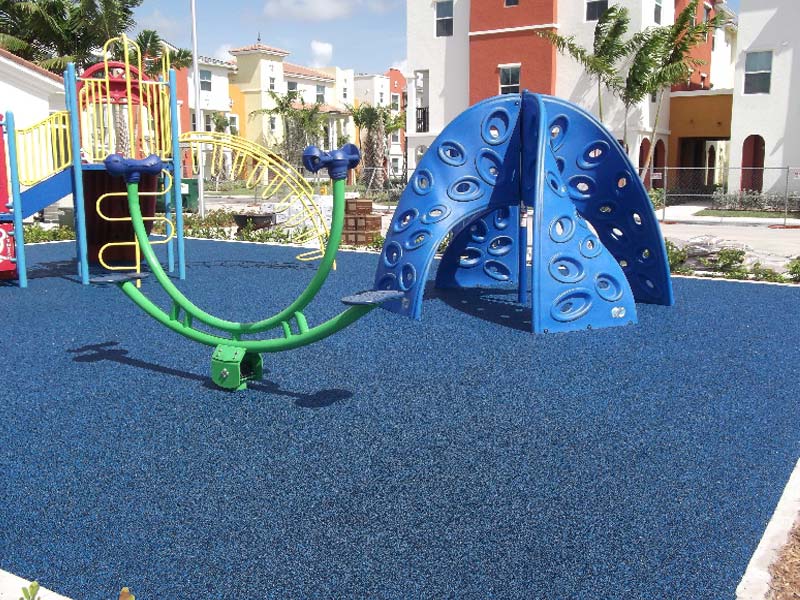
Multi-colored rubber mulch playground surfacing.

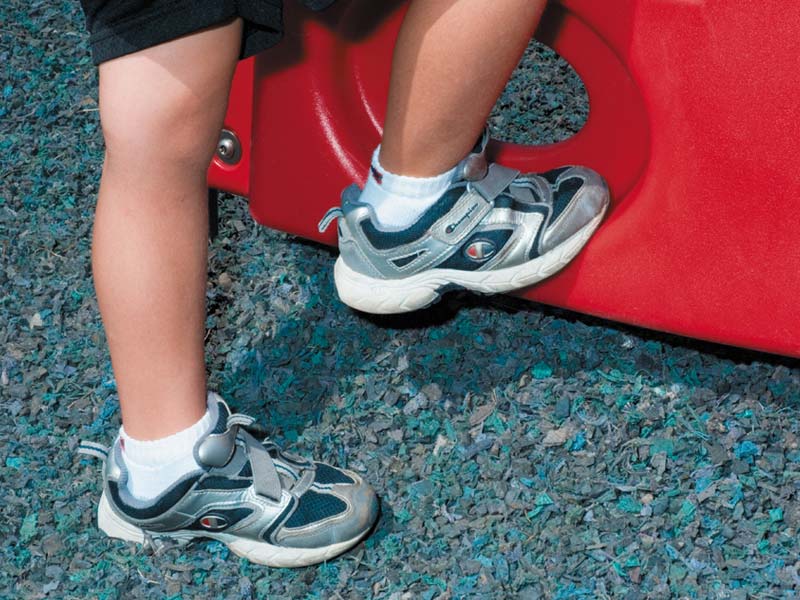
Rubber mulch is made of shredded recycled rubber that will not freeze in the winter, absorb water, or sustain the growth of mold or fungus. Also, it does not attract bugs or emit odors and requires little maintenance over time.

Rubber mulch exceeds all of the safety requirements put in place by the ASTMIPEMA and CPSC organizations and is ADA accessible. Finally, this surface is a great shock absorbent because of its material. Rubber has a large elasticity component, which allows it to compress when fallen on and spring back. This lessens a child’s fall because when the surface material is compressed it absorbs the impact.

Wood Mulch

An example of wooden mulch playground surfacing
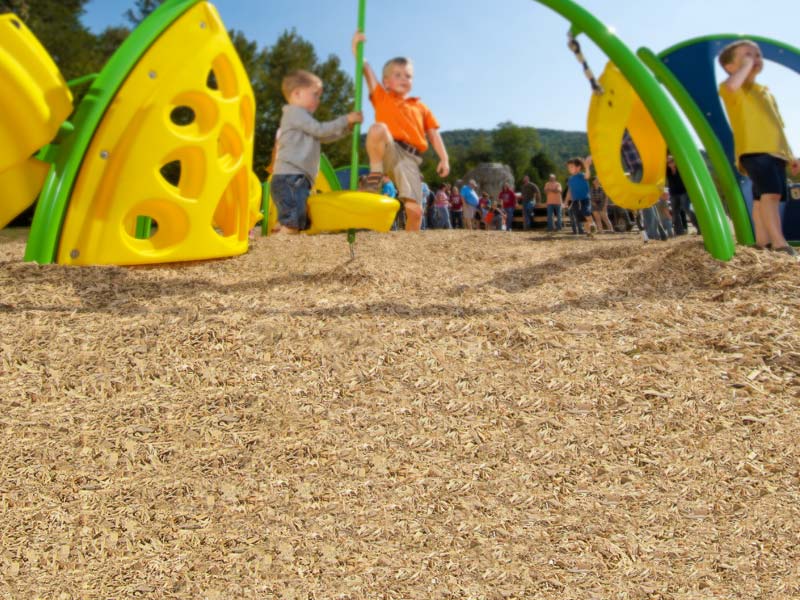
Wooden mulch playground surfacing.

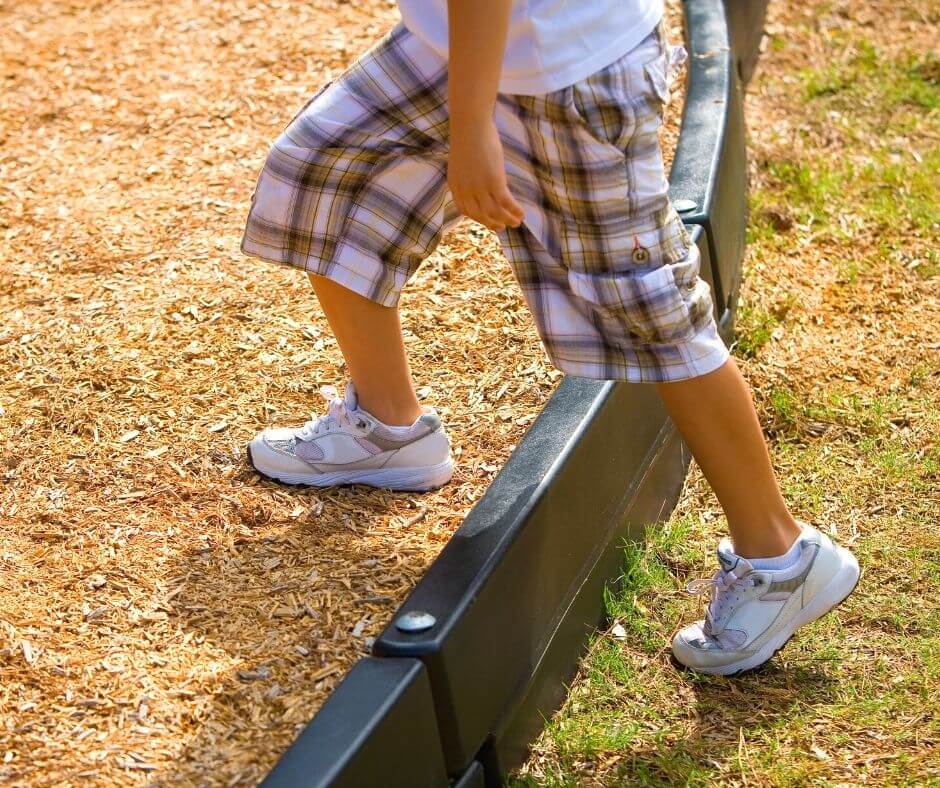
Much like rubber mulch, wooden mulch is also a fantastic shock absorbent. Wooden mulch is composed of 100 percent natural fibers and does not contain any chemicals or artificial components. This mulch is not the same as your garden mulch though. Garden mulch is usually dyed different colors for an aesthetic appeal and can be treated with chemicals to repel pests. This type of mulch is not compressed, leaving splinters that can injure children or adults. Playground mulch has been specifically engineered for playground purposes, meaning that there are no splinters or shreds of mulch that children can injure themselves on and there are no artificial dyes that can harm children’s health. Playground wooden mulch meets all of the ADA, ASTM and CPSC surfacing standards and id environmentally safe.

Among rubber and wooden mulch, rubber tilespour-in-place surfaces and sand are also great shock absorbents. Some of these surfaces must have a base surface made of crushed gravel or concrete to maximize the surface’s ability to absorb shock from an impact. Concrete and crushed gravel are poor absorbents, as mention earlier, but by having these materials as a base surface, they level out the ground and provide a slight elevation for proper drainage. This allows the top surface to lay flat and become a better shock absorbent.

Learn More About Playground Surfacing

To learn more about the shock absorbency of different surfaces please review our previous blog posts:

We can refer you to our National Playground Construction Company to schedule an inspection of your playground surface and play structures. If you would like to inspect your playground yourself, please use the safety checklist provided by the United States CPSC organization.

If you have any questions or concerns about your playground surface, please feel free to give BYO Recreation a call at 1-800-853-5316. One of our professionals will be happy to answer all of your playground surfacing questions.

Categories
Playground Safety Surfacing

Rubber Playground Surfacing: Rubber Tiles vs. Poured in Place

Rubber playground surfacing is the ideal choice for impact attenuation. The majority of injuries that occur in a play area are the result of children falling to the ground. Therefor, it’s important to have a good surface that will absorb the majority of shock from a fall. We’ll cover the two most popular types of rubber playground surfacing for such instances.


Types of Rubber Playground Surfacing

Two surfaces that are fantastic shock absorbents are pour-in-place surfacing and tiled surfacing. There are other surfaces that are great shock absorbents such as rubber and wooden mulch. However, for the sake of this blog, I want to focus on the tiled and pour-in-place surfacing.

Poured-in-Place

An example of colorful poured-in-place rubber playground surfacing
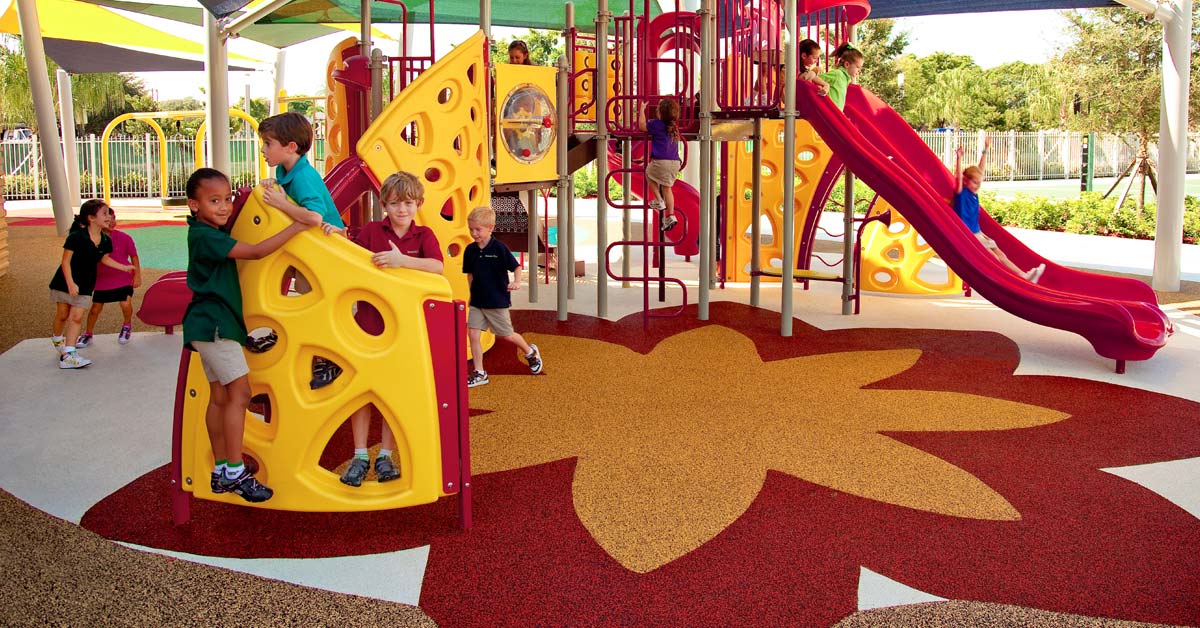
Rubber PIP playground surfacing at ARC of St. Johns.

Pour-in-place surfacing is a two-layered surfacing system. The bottom layer, or basemat layer, is made out of 100 percent SBR recycled rubber and polyurethane.  The top layer, or surface layer, is made out of EPDM recycled rubber and polyurethane. Recycled rubber is a fantastic shock absorbent. This surface is two layers, so it has double the shock absorbency, making children safer when playing.

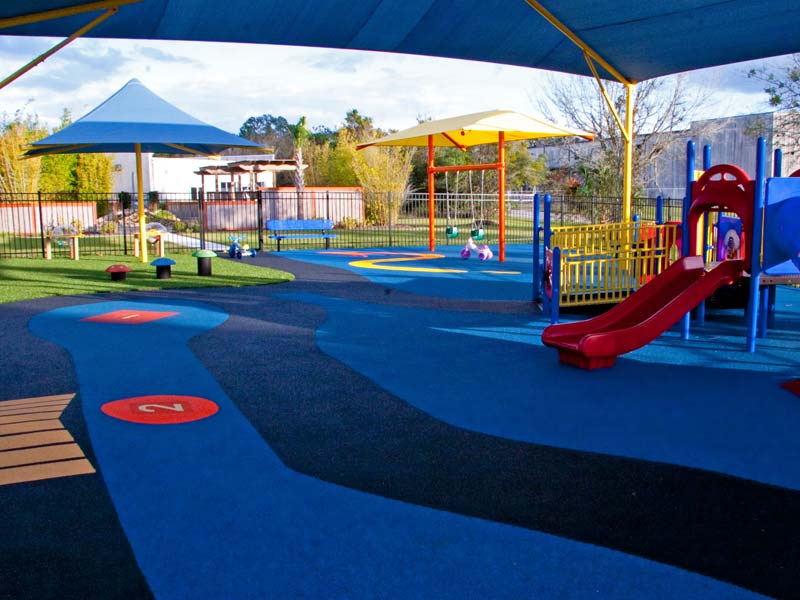
The International Play Equipment Manufacturers Association (IPEMA) certifies this surface as safe to use around critical fall heights. Additionally, it meets all the playground regulations put in place by the Consumer Product Safety Commission (CPSC). This surface is not only great for safety, but it’s a perfect way to customize your play space with one-of-a-kind designs and unique colors. For instance, the example above features fun shapes, numbers, and the business logo.

Rubber Tiles

An example of rubber playground surfacing tiles.
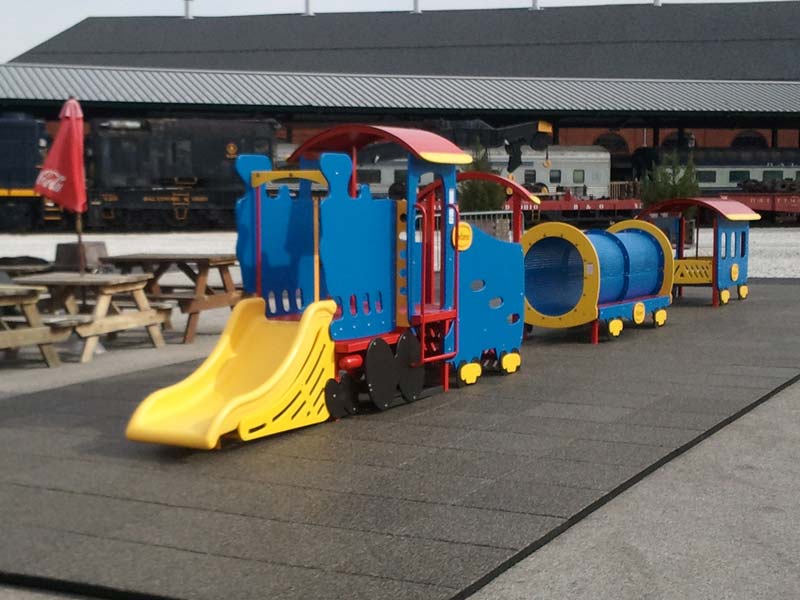
Rubber playground surfacing tiles at Amtrak.

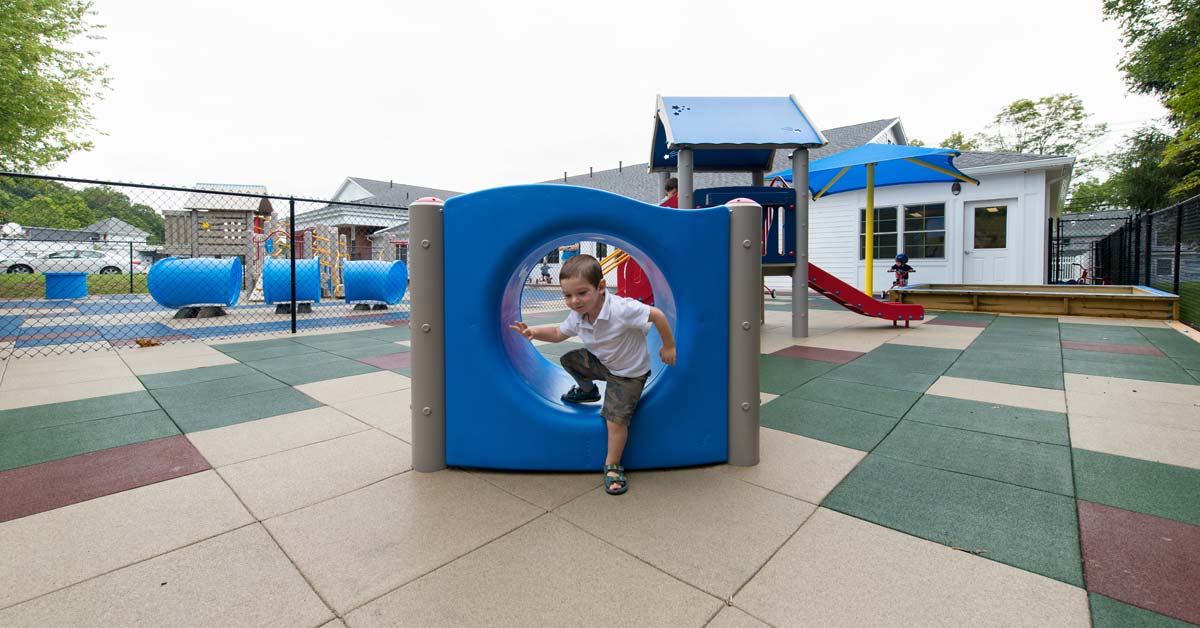
Tile Surfacing consists of 2×2 foot squares bound together.  The squares are made with recycled and virgin rubber and must be installed over a crushed gravel or concrete base. This reduces weathering and maximizes the shock absorbency ability.  The tile surface prevents debris from entering the play area and makes for an easy clean up of any mess. This surface is approved by the CPSC government organization and is properly installed with varying widths depending on critical fall points around a play structure.

Lean More About Rubber Playground Surfacing

Both of these surfaces are ADA accessible, making is easy for children with special needs to experience all the thrill and excitement of playtime.  These two surfaces are amazing shock absorbents, which prevents children from serious injuries when falling.

Finally, if you have any questions about surfacing, please call BYO Recreation at 1-800-853-5316. One of our professionals will be happy to answer all of your questions and assist your shopping experience. Also, you can visit our site to learn more information about rubber playground surfacing.

Categories
Playground Safety Playground Safety Surfacing

Safety Surfacing Details You May Not Know About

Laying the right safety surfacing at your playground area can be a lot harder than you think. You can’t just put down a couple bags of sand or mulch and say your playground is safe.

First, research surface materials and find out what the requirements are for surfacing your play space. Then you can provide proper safety surfacing throughout your playground. Lucky for you, you can find all of that information right here on our blog.


Safety Surfacing Options

Let’s start with your options. According to the CPSC Handbook for Public Playground Safety, there are two types of safety surfacing: unitary and loose-fill. The right surfacing for your playground will depend on many factors such as:

  • How much you would like to spend on safety surfacing. (This includes upfront cost as well as cost of maintenance.)
  • Playground use frequency and by how many children.
  • Site conditions like drainage and climate.
  • You know your total playground budget.
  • You’re interested in a long-term warranty.

Safety surfacing must be IPEMA tested AND approved in order to be compliant for playground use. Your surfacing should also allow your playground to be accessible to those with disabilities in accordance with ADA standards.

Unitary Surfacing

An example of poured-in-place safety surfacing.
Poured-in-place, rubber safety surfacing.

Unitary Safety Surfacing is durable, long lasting, and more flexible than traditional surfacing. Unlike loose fill, there is no displacement so daily or weekly maintenance is minimal.

To start, unitary surfacing materials are held in place by a binder that may be installed at the playground site, such as rubber mats, tiles and Poured-in-Place (PIP) material. Unitary surfaces are cured after installment to form a shock-absorbing surface. Curing after installment is strongly recommended to avoid discoloration and roughness.

The most common and versatile type of unitary surfacing is PIP. This is installed over asphalt, concrete, or crush stone, making it great for spare parking lot space. It’s also the most customizable option and does not require any borders.

On the other hand, rubber tiles offer a lower maintenance option for unitary surfacing and are especially great for facilities with indoor playgrounds. Also, maintenance is very simple and low cost with Rubber Tiles. Repairs are simple as you need only remove and replace the damaged tile.

Loose-Fill Surfacing

A shot of wood mulch playground surfacing
Wood mulch safety surfacing.

Loose-fill safety surfacing is a cost-effective safety surfacing for any facility that is looking for a high rated, affordable option. Additionally, it’s the most common playground surfacing used in the United States. These materials are loose bark, shredded, or chipped, and typically made of engineered wood fiber or recycled tires. This mulch is not like the mulch you toss in your garden though.

Playground mulch is specifically for outdoor play areas. Unlike garden mulch, playground mulch is compacts together, eliminating splinters and maximizing shock absorbency. Other loose-fill materials are sand, pea gravel and rubber mulch. Out of all surfacing options, Rubber Mulch provides one of the best impact attenuation ratings through IPEMA.

Loose-fill materials compress about 25 percent over time due to use and weathering, so it is important to consider this when filling your surface. For example. if it’s required to have nine inches of fill, then your initial fill should be 12 inches. This will account for the weathering and compaction over time. Therefor, although loose-fill surfacing is cheaper up front, it can cost more money over time.

Activity displaces the fiber and requires regular raking to be turned back into place. This is especially true in heavy use areas such as below swings and at the base of slides.

According to PlaygroundSafety.org, “equipment height influences the ability of a surface to provide protection in the event of a child’s fall. Research has shown equipment more than 5 feet high more than doubles the probability of injury. “

Safety Surfacing Shock Absorbency

Of course, both of these safety surfacing options have one important factors in common: shock absorbency. On a playground, shock absorbency may be the most important safety factor.

It’s inevitable that children fall, trip, and stumble on the playground. The more shock absorbency a surface has, the more cushion there is for fallen children. This helps lessen the impact of falls, preventing serious injuries and in some cases death.

Finally, all safety surfacing must have a three to six inch base ground made out of gravel and must comply to the ATSM F1292 standards. Having a base ground allows for proper drainage and helps your desired surface perform better.

Learn More About Safety Surfacing

For more information about surfacing or the importance of shock absorbency on the playground, please feel free you give us a call at 1-800-853-5316. One of our certified professionals will be happy to help you choose the best surface for your play space. We can also schedule an inspection or installment of your surfacing for you!

Additionally, we recommend you review pages 8-11 of the CPSC Handbook for Public Playground Safety to learn more about safety surfacing.

Categories
Playground Equipment Playground Planning

The Playground Installation Process: A Play-by-Play Examination (With Real Examples!)

Proper playground installation is an involved process that ensures the safety of your playground. BYO Recreation and National Playground Construction (NPC) worked together to install a complete playground project for a new elementary school in St. Augustine, FL.


Playground Installation Step-by-Step

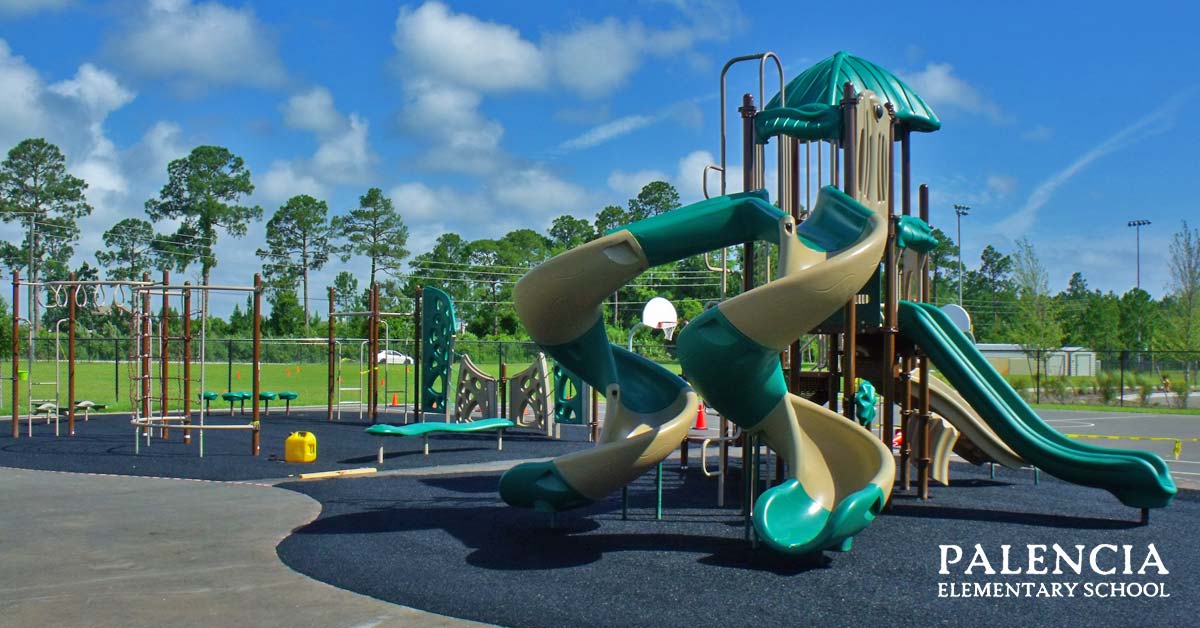
Palencia Elementary School took advantage of BYO Recreation’s playground savings! They purchased a Desert Oasis playground structure and a fitness structure. Because of the substantial savings they had left over due to our annual Quick Ship Sale, they were able to purchase poured-in-place safety surfacing with their school logo.

Moreover, professional playground installation ensures that the playground equipment is properly installed and meets safety requirements. BYO Recreation’s installers are certified in playground safety standards, so there’s no guess work.

The installation at Palencia Elementary took two weeks. One week was spent on the construction of the two playground structures. The second week was for the installation of the Poured-in-Place Safety Surfacing. Both jobs involved a lot of demanding and rigorous manual labor.

Playground Shipping

Unloading Palencia Elementary School’s playground equipment.

First, the playground equipment is shipped freight in crates and on pallets. A project manager will organize shipment times and sign-off for optimized efficiency. When the truck arrives at the playground site, the installers unload the equipment with a forklift or by hand. After unloading the equipment, the installers check that all parts are present and in perfect condition.

Arranging Equipment

Laying out equipment and drilling holes for playground posts.

Secondly, the installers lay out the equipment in the use zone, an essential step in the installation process. This is how the installers know where the holes are going to go and make sure the distances are correct in relation to the other equipment. They start with the core of the structure first and work outwards.

Afterwards, the installers use an auger to dig the holes in the asphalt. This will enable them to install the posts in the ground with concrete. The concrete set overnight, then the installers began to lay the decks and other play components.

Playground Surfacing Installation

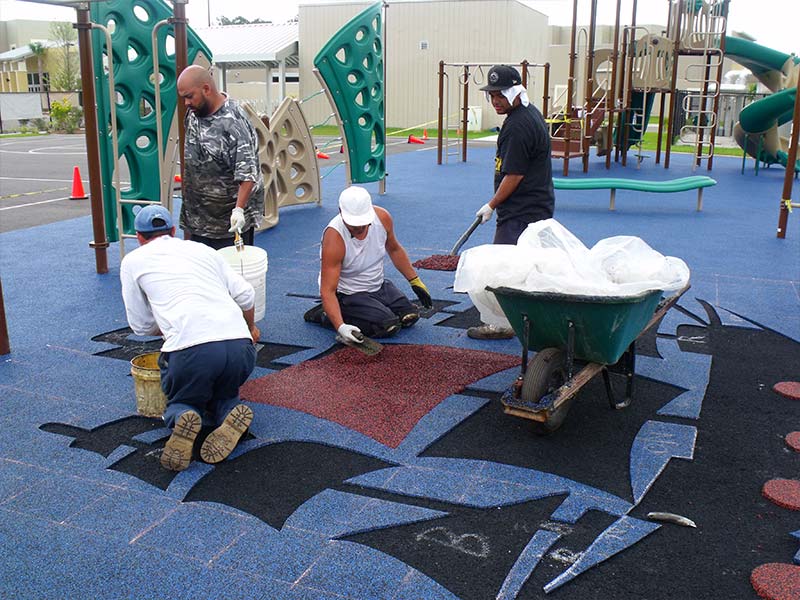
Installing a poured-in-place surfacing pirate ship logo.
Placing poured-in-place surfacing down for the Palencia Elementary School logo.

Once the playground is fully constructed, the Poured-in-Place installers begin the process of marking out the area. First, they start with mixing the rubber with glue and laying it out.

Next, they lay a thick base coat. For the space at Palencia, this took about two days including dry time. Lastly, they lay out the top coat, allow it to dry and then they will incorporate the pirate ship design. Poured-in-place surfacing mix must be temperature controlled, so this was a great project for Florida weather. Poured-in-place will not cure properly in colder temperatures.

Learn More About Playground Installation

Finally, to see photos of other completed playgrounds visit the BYO Recreation’s Gallery page. To learn more about BYO Recreation, NPC and professional playground installation call 1-800-853-5316 or visit www.byoplayground.com. Or, to learn more about playground installation, visit our services page.

Categories
Uncategorized

Best Outdoor Fitness Equipment for Adults

Outdoor fitness has been a universal activity since cavemen roamed the earth. People are compelled to stay fit or get fit for many different reasons, some being the following:

  • Lower risk of heart attack or other life-threatening health issues.
  • Increase ability to protect one’s self against predators.
  • Perform better in labor-intensive jobs or careers.

There are infinite reasons why people are driven to be fit. However, not all people have the time or the money to attend a gym. Here’s how you can make fitness more accessible for people on the go.


Providing Exercise Opportunities

First, what better way to give these busy adults the exercise time they desire, so they can stay in-shape without having to go to, or spend money at, a gym?

Three words: Outdoor fitness equipment!

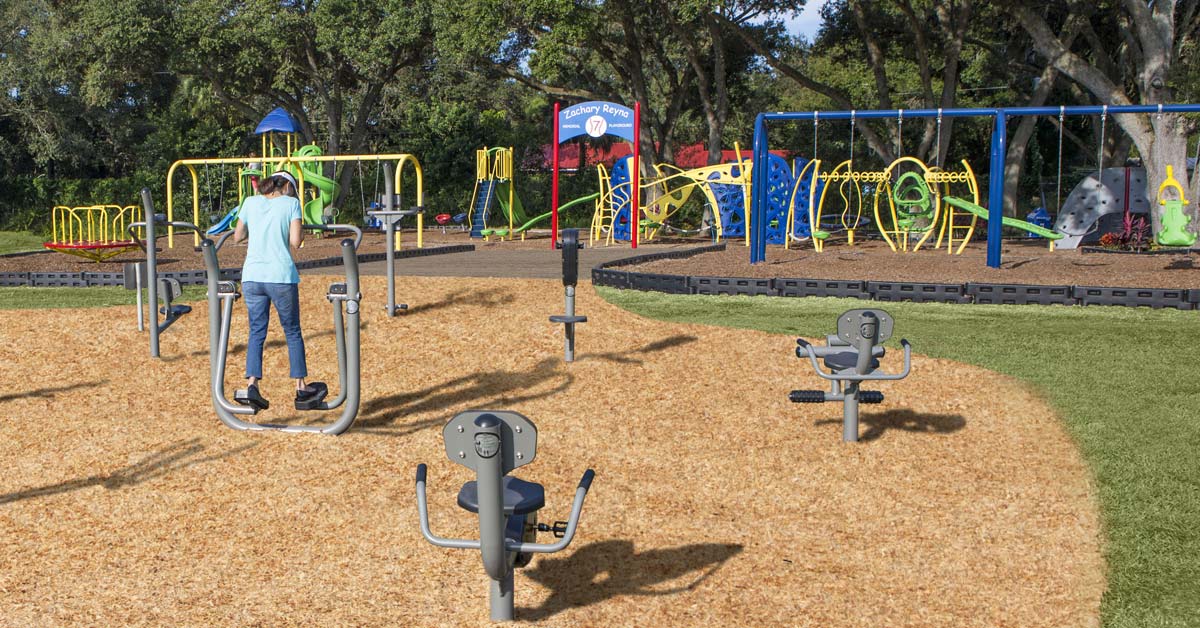
This type of fitness equipment is great for parks or areas with a playground area. Adults can workout for free while their kids play versus sitting on a park bench. This saves visitors money and time because the outdoor fitness equipment is conveniently placed near a children’s playground. Adults can easily supervise their children while getting or staying fit!

“Emerging science suggests that exercising outdoors increases the overall enjoyment of working out, as well as increasing the frequency and length of time spent exercising,” says Stephanie Devine, vice president of sales and marketing for PlayCore Recreation.

Types of Outdoor Fitness Equipment

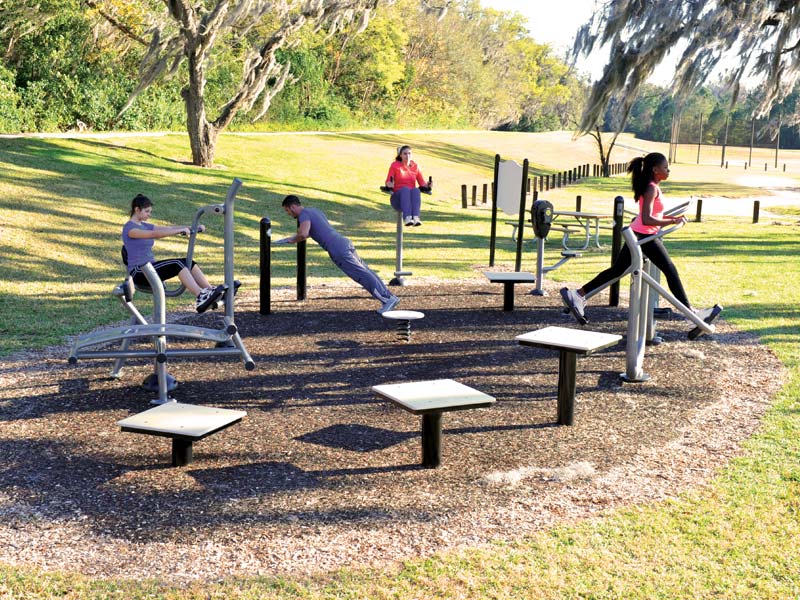
Example of an outdoor fitness center
An outdoor fitness center can consist of most of the equipment a standard gym offers.

Equip your space with all the standard fitness equipment you’d find at a gym. Find everything from fitness machines to manual equipment that’s ideal for fitness trails. Also, customize your equipment with different colors to match your space.

Machine Fitness

Machine fitness equipment is becoming more common in communities as the popularity of outdoor activities grow. Our machine fitness equipment is heavy-duty, rust-resistant, and has the familiarity of the equipment you’d find in your local gym. Choose from:

  • Cardio Walkers
  • Leg Press
  • Chest-Press Stations
  • Back Extension Station
  • And More!

Traditional Fitness

Secondly, Traditional fitness equipment is perfect for adding value to an existing jogging or bicycle path. Create fitness trails that offer even more exercise options in a relaxing and natural setting. Fitness trails enable participants to intermix their strength training with a brisk walk or jog. Choose from:

  • Balance Equipment
  • Push Up/Pull Up Bars
  • Sit Up Stations
  • Parallel Bars
  • And More!

Additionally, BYO Recreation fitness equipment is designed for ages 12+. All equipment is engineered to withstand repeated vigorous exercise and harsh weather. Also, most equipment for fitness centers require minimal maintenance. Each structure is built from high-quality materials and tested for durability. To verify the safety of any fitness equipment, you should ask the manufacturers for the safety reports.

Learn More About Outdoor Fitness Equipment

Finally, BYO Recreation offers a variety of outdoor fitness equipment that is perfect for working out every muscle in the body. If you have any questions, please give us a call at 1-800-853-5316. One of our consultants will be more than happy to help you choose the best equipment for your outdoor fitness center.

Categories
Playground Safety Playground Safety Surfacing

Playground Safety Measures to Implement at Your Organization

Playground Safety is one of the most important components of safety in a play space, so it’s important to know what you should be inspecting in order to keep children safe at play.


Playground Safety Statistics

According to the United States Consumer Product Safety Commission:

About 200,000 children are treated in U.S. hospital emergency rooms for playground equipment-related injuries. An estimated 148,000 of these injuries involve public playground equipment and an estimated 51,000 involve home playground equipment.

Also, about 15 children die each year as a result of playground equipment-related incidents. Most of the injuries are the result of falls. These are primarily falls to the ground below the equipment, but falls from one piece of equipment to another are also reported. Most deaths are due to strangulations, though some are due to falls.

Playground Safety Measures

Let’s educate you from the ground up on playground structure safety. Children at play may fall off the structure injuring their heads, arms and legs. Placing cement or asphalt under a play structure is forbidden because the surface does not have any kind of effective shock absorption. If a child falls and hits his or her head on these surfaces he or she may obtain a fractured skull or neck, a concussion or even swelling of the brain. Falling on these surfaces may also result in death.

Safe Playground Surfaces

An example of safe wood mulch playground surfacing.

Wooden and rubber mulch, fine sand and fine gravel are great surfaces for a play space. These surfaces have fantastic shock absorbency, preventing injuries upon falling. You still must maintain these surfaces, making sure the depth is well-kept and there are no exposed roots, rocks or hard ground.  All BYO Recreation surfaces are ADAASTM and CPSC certified. In other words, you can be sure that your children will have a lesser chance of injury if they fall.

Playground Structures

An example of playground bars exceeding the recommended 9" standard.
These playground overhead bars exceed 9″, and therefor do not present an entrapment hazard.

Moving up the ladder to the play structures, we can find more ways to implement playground safety. Let’s start with prevention of head entrapment.

Children love to climb through safety bars on the playground. However, if they attempt to go through feet first they will reduce their ability to climb out of danger’s way causing their head to get stuck between bars. If unattended, children can strangle to death as a result.

In general, openings that are closed on all sides should be less than 3 1/2″ or greater than 9″, according to the U.S. CPSC. Openings that are between 3′ 1/2″ and 9″ present a head entrapment hazard. These openings are large enough to permit a child’s body to go through, but are too small for a child’s head.

Installation & Maintenance

BYO Recreation offers professional installment of all playground equipment through our National Playground Construction Company (NPC). NPC is a licensed Certified General Contractor (CGC) and all NPC installers are certified by the National Playground Safety Institute as playground professionals (NPSI). Hiring us will ensure you that your playground is assembled properly and meets all the safety codes and regulations put in place by government organizations such as the U.S. CPSC.

We also recommend that you inspect all hooks to make sure they are tightly closed with no protrusions. This prevents children’s clothing from getting caught which, can cause strangulation. Ropes and cords are yet another way that children can be strangled. They can get tangled in or fall on to the rope or cord that has been tied around a part of the play structure. It is important to make sure ropes and cords hang normally and are not tied or tangled in dangerous ways.

Learn More About Playground Safety

These are only a couple ways to incorporate playground safety and reduce the amount of injuries or deaths on your play area. Help save children’s lives by inspecting your playground on a regular basis.

Additionally, to learn more about playground safety, please review the Public Playground Safety Handbook. To obtain a playground safety checklist please refer to the United States Consumer Product Safety Commission’s Public Playground Safety Checklist.

If you would like to request a professional to examine your playground equipment, please give us a call at 1-800-853-5316. One of our consultants will be more than happy to assist you and answer all of your playground safety questions.

Categories
Playground Planning Playground Safety

Here’s How Much Playground Shade Can Make a Difference

Playground shade seems pretty unimportant when it comes to playground safety. After all, making sure play structures are built properly and swing set parts are not worn out seem to be at the top of the safety checklist. However, shade is important too, if not the most important safety feature on a playground. So if shade is the most important safety feature, why is it overlooked so often?

Answer: People don’t realize how HOT playground equipment and surfaces can get!


Unbelievable Playground Temperatures

Let’s find out just how hot a play area can get on an average sunny summer day.

In Cathedral City, California, the CBS Local 2 News staff took a laser temperature gun to measure a play space lacking playground shade. The place was Panorama Park, CA, and it was 115F degrees outside. The playground equipment and flooring measured 161F to 180F degrees! According to AntiScald Inc., a person can receive third degree burns by touching a structure at 140F degrees for 5 seconds. That’s 20-40 degrees cooler than the recorded temperature of playgrounds not protected with shade.

Burns are not the only thing to worry about.  “Children’s skin is especially sensitive to direct sunlight because they don’t have as many pigment cells as adults do. Children burn faster and cumulative skin damage starts with the first exposure,” according to the American Academy of Dermatology. “One bad sunburn in childhood could cause skin cancer 30 years later.” Improper shade over your playground area can cause children to over heat and adults can have heat strokes resulting in a trip to the hospital.

So you can see why shade is a very important component to outdoor safety. It prevents heat exhaustion, heat strokes, second and third degree burns, skin cancer and so much more!

Playground Shade for All Outdoor Spaces

BYO Recreation offers a variety of shade structures for playgrounds, sandboxes, benches, tables, sidewalks and virtually anywhere you desire. Pretty cool!

Example of playground shade for a large preschool.
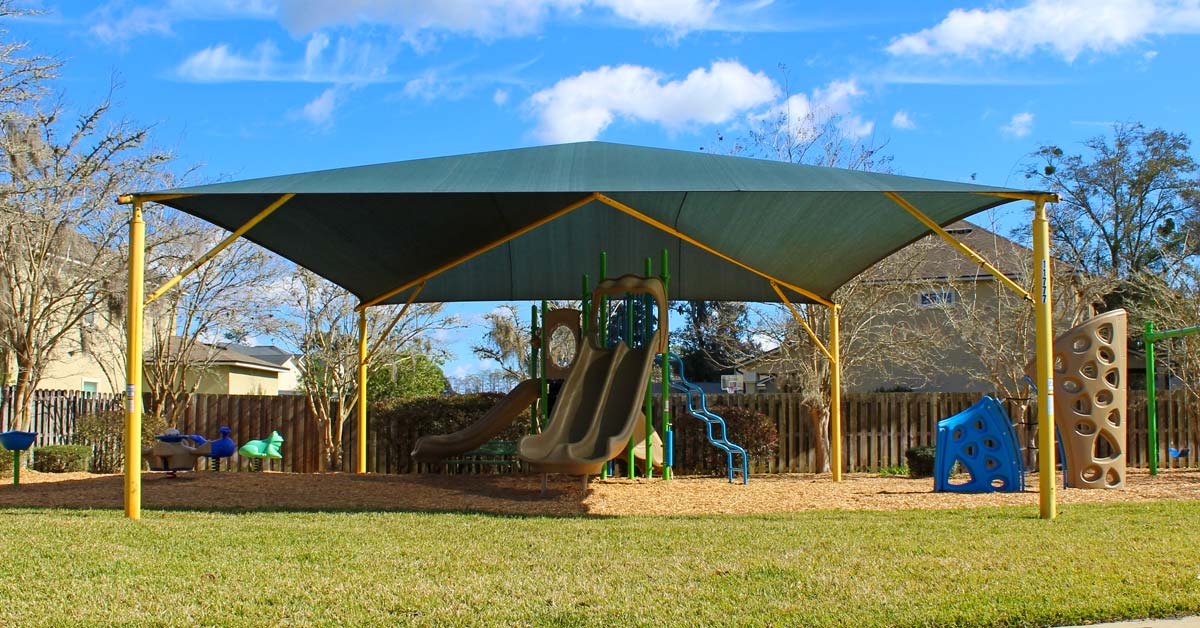
Playground shade comes in several shapes, sizes, and styles to accommodate any space.

Additionally, to learn more about playground safety, please review the Public Playground Safety Handbook. To obtain a playground safety checklist please refer to the United States Consumer Product Safety Commission’s Public Playground Safety Checklist.

Finally, learn how playground shade can save your visitors from harsh injuries or illnesses by calling 1-800-853-5316. One of our consultants will be happy to answer your inquires and concerns. Also, visit our website and take a look at our state-of-the-art playground shade structures and place an order to save children’s health.

Categories
Playground Equipment

How Accessible Playground Equipment Can Make Your Space More Inclusive

In 1990, there was a big win for accessible playground equipment initiatives. The Americans with Disabilities Act was passed! This act is designed to give civil rights protection to individuals with disabilities. According to the U.S. Department of Justice, it “guarantees equal opportunity for individuals with disabilities in public accommodations” and other locations.


Accessible Playground Equipment Types

Here at BYO Recreation, we believe in every child having the opportunity to enjoy the thrill and excitement of adventure on the playground. Whether your playground is at a daycare, in a park, at a school or at your place of business, you should make sure that your playground equipment is ADA approved. These standards give every child the ability and access to fair play.

Wheelchair Ramps

Example of a wheelchair ramp for accessible playground equipment
An integrated playground ramp for wheelchair use.

First, one way to equip your space with accessible playground equipment is to install wheelchair ramps. These help kids enter and exit the play space with ease, especially playgrounds that are bordered. BYO Recreation offers a variety of playground surfaces for wheelchair accessibility. All are ADA certified, but some are a little easier to move around on than others. For example, our mulch is ADA certified, but installing a Poured-In-Place surface is smoother and easier for wheelchairs to move around on.

Accessible Swings & Spring Riders

Example of an accessible playground swing
An accessible playground swing for children of all abilities. Comes with or without a safety harness.

Another way for kids with special needs to enjoy accessible playground equipment are the swings and spring riders. BYO Recreation offers swings that are designed specifically for kids with special needs. They are engineered with a safety bar that lowers down and buckles in place to ensure the child’s safety.  

Additionally, spring riders are great because they are low to the ground and a whole bunch of fun! The height makes it easy for kids to move from their wheelchair onto the spring rider and back. Each rider has feet and hand pegs, so kids can hold on and spring away!

Learn More About Accessible Playground Equipment

There are plenty of ways to include accessible playground equipment at your space. We’ve highlighted only a couple ways that will allow children with disabilities to feel included on your playground.

To learn about more ways to make your playground ADA accessible and keep kids safe at play please visit BYO Recreation’s website or give us a call at 1-800-853-5316. One of our consultants will be more than happy to answer all of your questions and concerns. We’re ready to help you choose the best accessible playground equipment for your play space.

Also, to learn about playground safety, please review the Public Playground Safety Handbook. To obtain a playground safety checklist please refer to the United States Consumer Product Safety Commission’s Public Playground Safety Checklist.

Finally, subscribe to our blog for more useful information on accessible playground equipment and more!

Categories
Playground Equipment Playground Safety

Commercial Swing Set Maintenance Best Practices

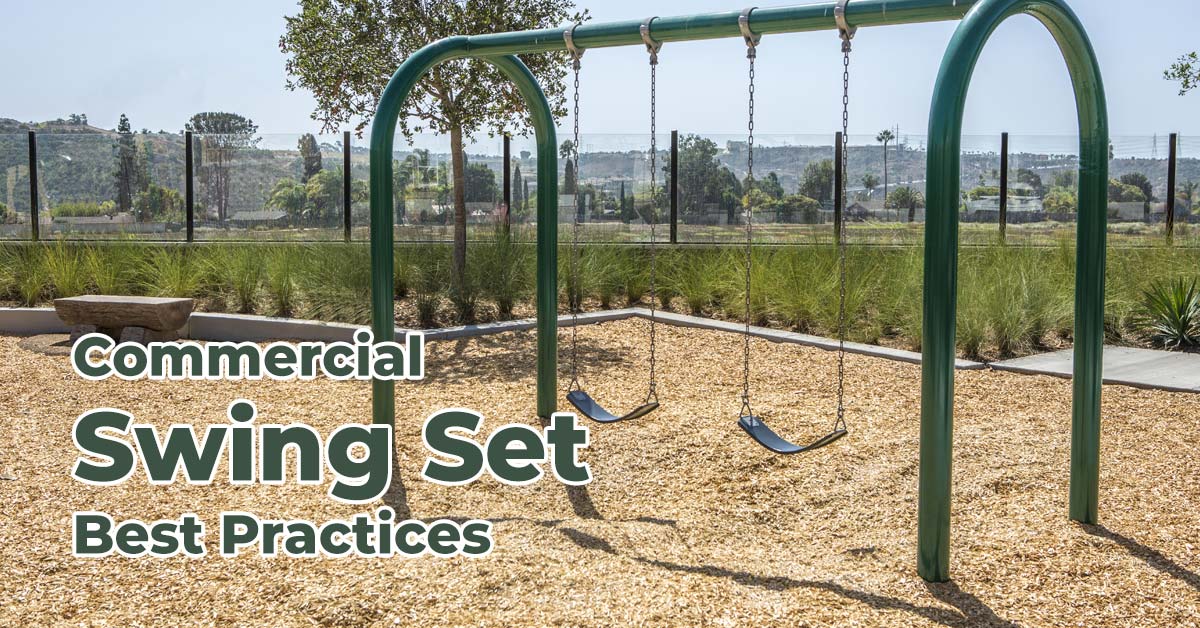
A commercial swing set is the most common playground equipment component found in any play space. It’s also the most used structure by kids of all ages. The heavy amount of use makes it even more critical to inspect your playground swings every six months to a year.


Standard Commercial Swing Set Inspection

A commercial swing set is composed of several parts such as swivels, seats, frame connectors, hangers and chains. Over time every day wear and tear from use and Mother Nature take a toll on these parts causing equipment to become brittle, or weak. When inspecting your commercial swing set, examine the chains and hangers first, because these are the most replaced parts of a swing set.

Swing Chains

Some chains come coated in a protective material to prevent children from pinching themselves. Over time, this coating can come off and expose the chain metal. The chain is coated in anti-ruse, galvanized steel, but the coating gives extra protection and a nice visual appeal to your swing set.

Swing Hangers

Hangers are what attaches the swing to the top beam and slows for swinging motion. After years of swinging back and forth, these hangers wear down and become weak. The swinging motion rubs the chain against the hanger, which causes the link to become thin over a period of years. These should be replaced when worn out to ensure children will be safe while swinging.

Learn More About Commercial Swing Set Care

Every aspect of your swing set should be inspected to ensure your play structure is up-to-code and safe for child play. If you are unsure of how to inspect your playground space, please call BYO Recreation at 1-800-853-5316. Our certified playground representatives can help you make a checklist of all the major parts to examine.

Additionally, to learn more about playground safety, please review the Public Playground Safety Handbook. To obtain a playground safety checklist please refer to the United States Consumer Product Safety Commission’s Public Playground Safety Checklist.

Finally, for more tips on how to inspect your playground for safety, subscribe to our blog! And remember to inspect your commercial swing set annually!